Map the low spot.
Surface ponding and wet soil can need different solutions.
- Pond boundary
- Drying time after rain
- Possible safe outlet
Move the water off the clay lot.
O'Fallon Quality Drainage is an independent guide to French drains, yard grading, and roof runoff in St. Charles County. Start with the wet spot. Plan the outlet before the trench.
The call tracking number is active. Calls are recorded for training and quality purposes after a notice at the start of the call.

Watch the lawn after rain. Note the low spots, downspouts, and drying time. Check the property's soil map before choosing a repair.
Open the clay-soil note
Choose a wet zone. Planning observations, not a diagnosis or construction advice.
Surface ponding and wet soil can need different solutions.
Check roof runoff and ground slope. Stay clear of unstable soil and electrical hazards.
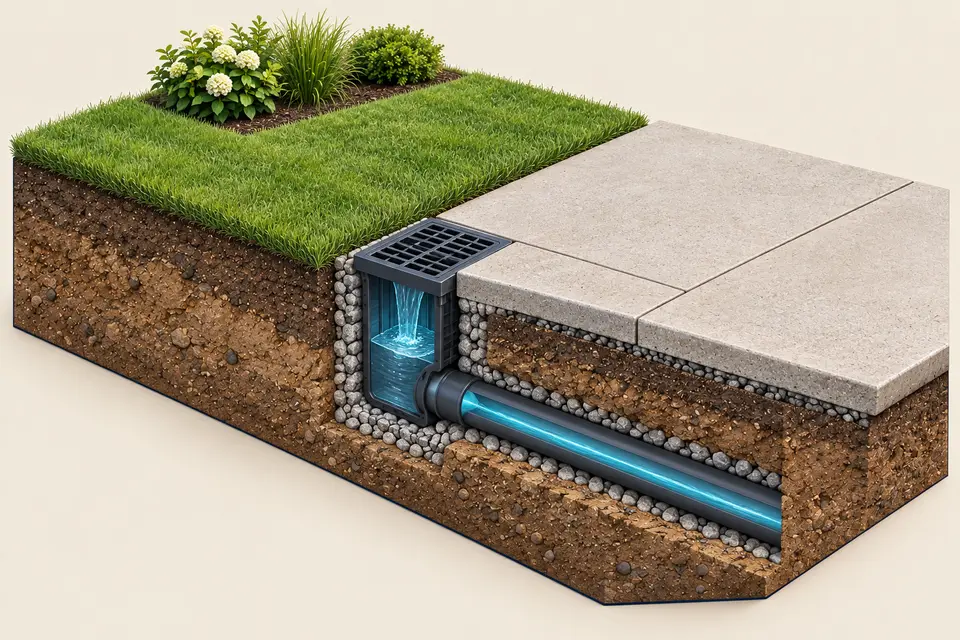
The low point, grate, and pipe outlet work together.
A solid runoff pipe and a subsurface collector do different jobs.
Below the lawn, across the surface, or away from the roof. Match the system to the source.
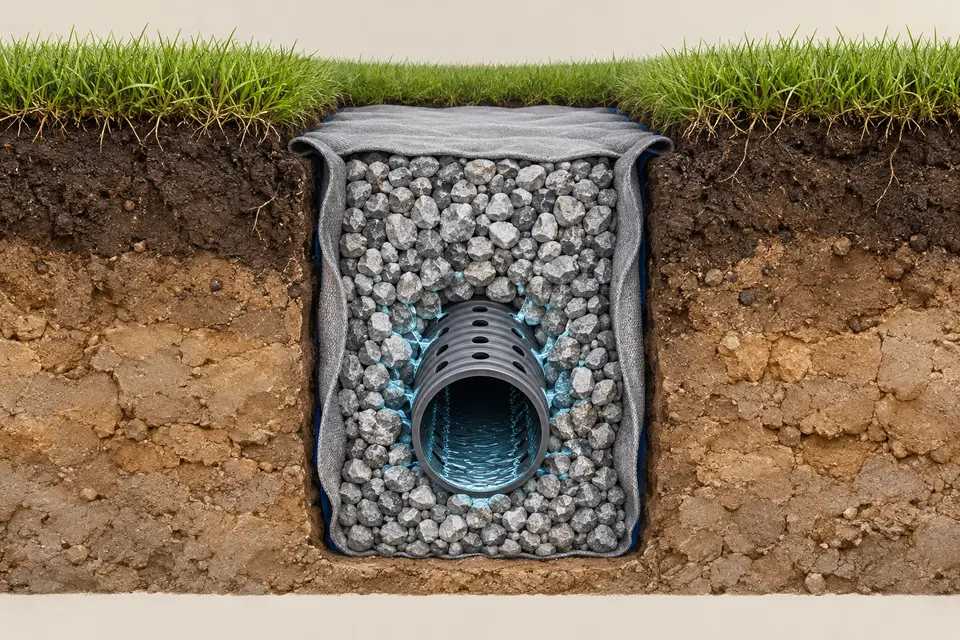
Is soil still wet after the surface dries?
Read the service guide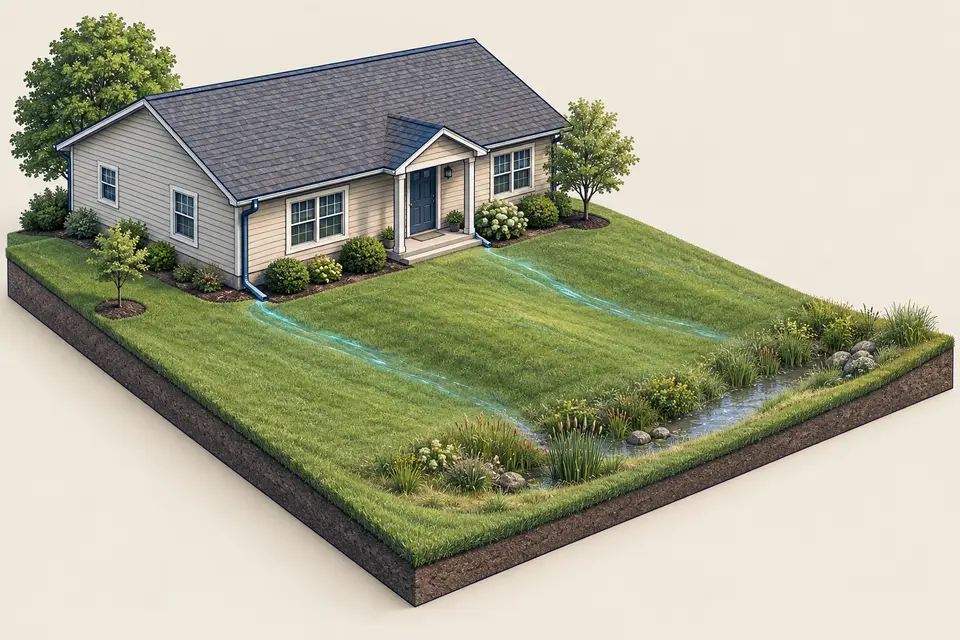
Does the lawn slope toward the house?
Read the service guide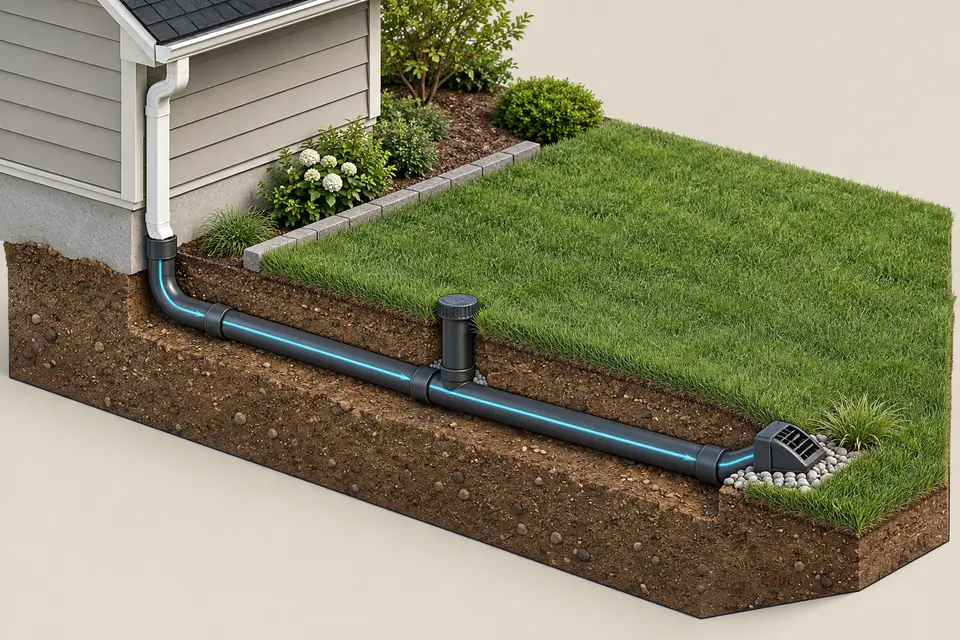
Does roof water empty beside the foundation?
Read the service guideWhen roof and lawn water soaks the backfill against the house, that is a separate exterior file: compare foundation yard drainage in O'Fallon before treating it as a buried-lawn problem.
All images are AI-created concept illustrations, not completed-job photographs or construction specifications.
A grate collects pavement runoff. The pipe needs a planned route and a lawful release.
Compare a complete written scope, not just a per-foot price. One address needs one property-specific quote.
| Layer | What the bid should name | Comparison check |
|---|---|---|
| 01 Locate | Wet-zone photos, utility locates, outlet search, and permit questions. | Included or excluded? |
| 02 Open | Access, excavation, spoils, and protection of walks, irrigation, and plants. | Depth and access named? |
| 03 Collect | Pipe, washed gravel, fabric or sock, basins, and cleanouts. | Materials specified? |
| 04 Release | Daylight, pop-up, storm tie-in, or a documented infiltration limit. | Outlet identified? |
| 05 Restore | Backfill, sod or seed, hardscape patch, and a first-storm check. | Finish and follow-up named? |
Ask for milestones. Utility locates, soil, city review, and lawn restoration can change the calendar.
Record the pond, grade, roof runoff, and possible outlet.
A provider confirms materials, lawful discharge, and city review.
Arrange Missouri 811 and private utility checks before digging.
Test the outlet, restore the surface, and watch the next storm.
Daylight, pop-up, or an approved connection: name it in writing. A neighbor's lawn is not an outlet.
Read the outlet field note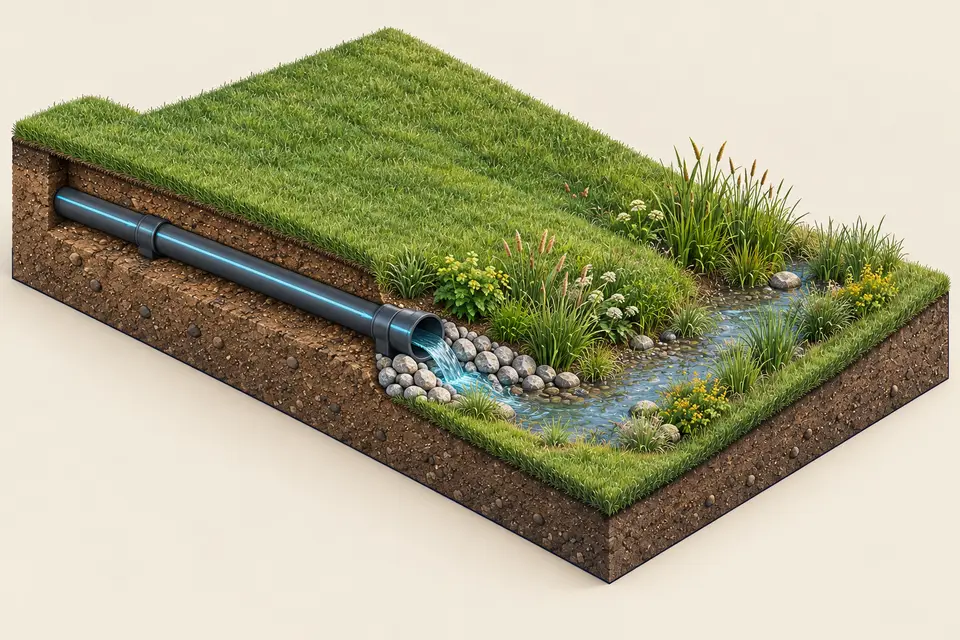
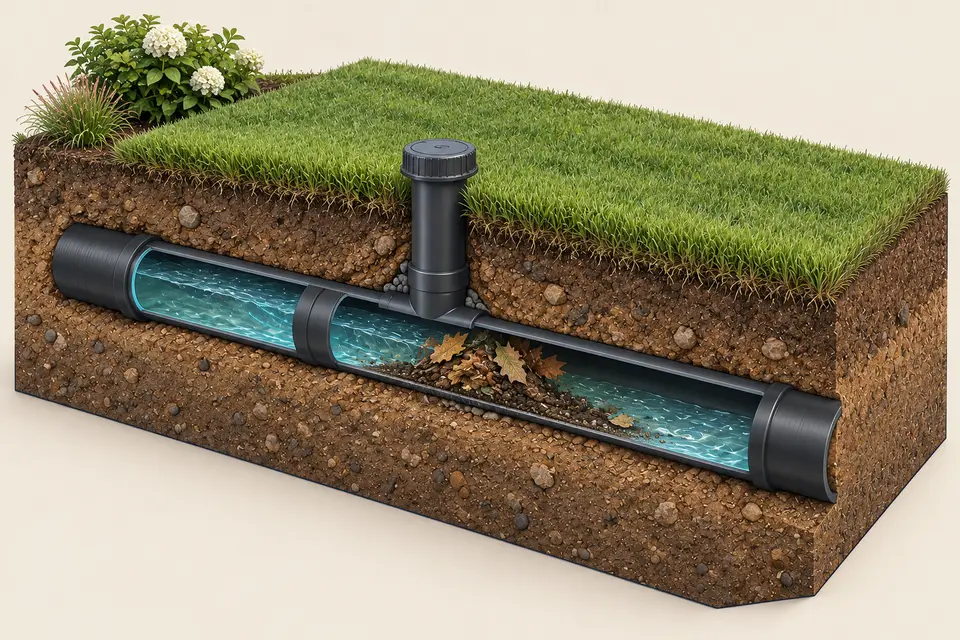
Blockage, damage, lost pitch, or a missing outlet? Expand a repair check below.
Check for clogged collection layers, settled sections, and an outlet that no longer drains.
Locate the blockage or damaged section and verify the remaining pipe path before replacing it.
Record the pond boundary and drying time to separate a surface low spot from persistent wet soil.
Trace where pumped water leaves and whether it returns toward the foundation.
Confirm the outlet elevation, debris access, and where released water will travel.
Match the grate elevation and debris load to the low point and the connected outlet pipe.
Check pavement slopes, grate placement, and pipe discharge before cutting a channel.
Review the shallow surface route, property boundaries, and restoration without sending water to a neighbor.
Tap a question for the short answer.
Clay plats, settled original grade, downspouts that dump at the foundation, and missing outlets can each perch water. The wet spot is evidence. It does not name the repair by itself.
No. Some lots need regrade, a swale, a catch basin, a downspout extension, or a different discharge. A buried collector is useful when water sits below the surface and a legal outlet exists.
Ask City of O'Fallon Engineering about the current review path before construction. The answer depends on the proposed grading, discharge, public connections, easements, and property conditions; the City's MS4 permit describes its municipal stormwater program, not a blanket permit for every backyard project.
A useful scope names the daylight, pop-up, storm connection, or infiltration point and checks that it does not send water onto a neighbor, a street without approval, or a protected water body.
Ask each proposal to price or clearly exclude excavation, pipe, gravel, fabric, restoration, cleanouts, and the outlet. National linear-foot ranges are planning bands, not a bid for one address.
The calendar depends on access, utility locates, soil, weather, restoration, and any city review. Confirm milestones instead of relying on a generic day count.
This is an independent information and assessment-routing website. A qualified local provider must inspect the property and confirm the scope, credentials, price, schedule, permit path, and warranty terms.
This call is being recorded for training and quality purposes. The notice plays at the start of the call.
Add your town, wet spot, and nearby downspouts. Save photos for provider follow-up; this form does not accept attachments.
636-246-7794